Advancing epistemic justice: Where communities lead, good research follows
Research starts with a problem. But what if it started with a community instead?
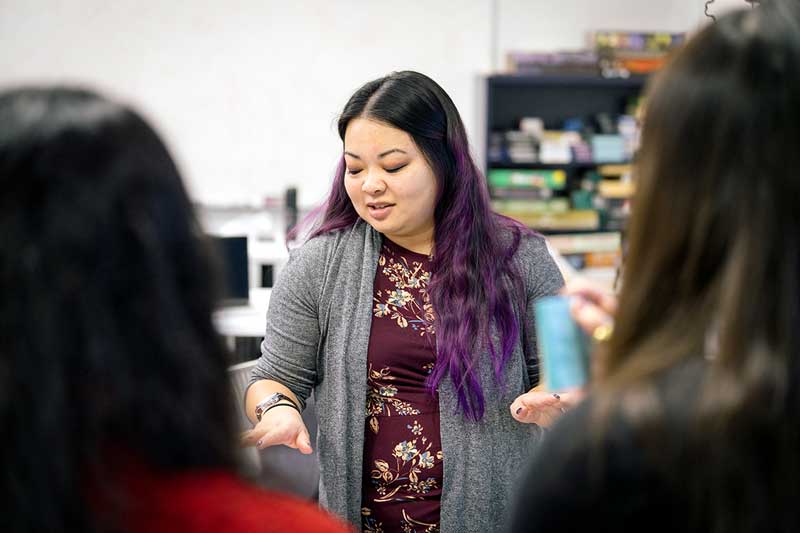

“If you’re coming in as someone outside the community, all you have to hold on to is that problem,” Michael Ann DeVito says. “But to solve it from an in-community perspective, you have much more insight into what people want to preserve.”
DeVito — an assistant professor at Khoury College and the College of Arts, Media and Design, and the director of Northeastern’s Sociotechnical Equity and Agency Laboratory (SEALab) — is a leading proponent of the research philosophy of epistemic justice. Her 2024 paper Moving Towards Epistemic Autonomy: A Paradigm Shift for Centering Participant Knowledge, which received an honorable mention at CHI, lays the idea out in detail, but the distinguishing feature is people’s authority over their own life experiences. DeVito’s work contributes to growing evidence that for some topics, de-emphasizing the role of an “objective” researcher in favor of the lived expertise of a community can surface better answers to more complex questions.
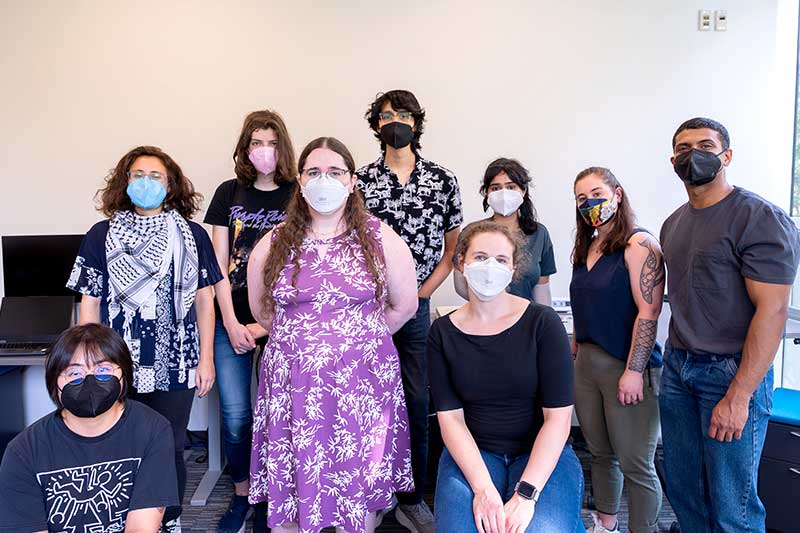
DeVito, along with several SEALab colleagues and other Khoury researchers, shared their work in a six-part Khoury News series called “Research that hits home,” showcasing researchers who come from — or form close partnerships with — the communities they study.
Empowering marginalized communities with just research methods
You get better answers to more complicated questions when you ask the people who live those questions every day. That increasingly popular research philosophy has a name — epistemic justice — and a leading proponent at Khoury College: SEALab Director Michael Ann DeVito.
Building safer online spaces through user-controlled social media design
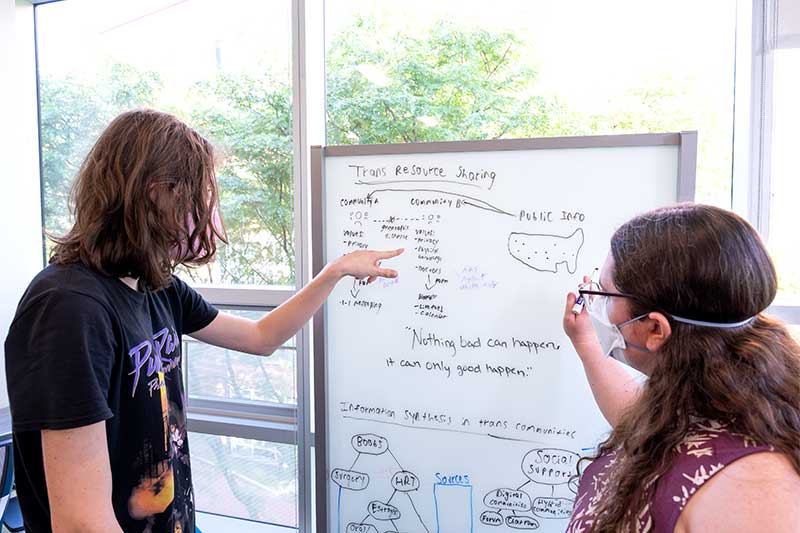
Social media amenable to human flourishing isn’t a pipe dream. It’s a design problem; one that Khoury PhD student Erika Melder is studying to solve by talking with the trans women most impacted by social media’s shortcomings.
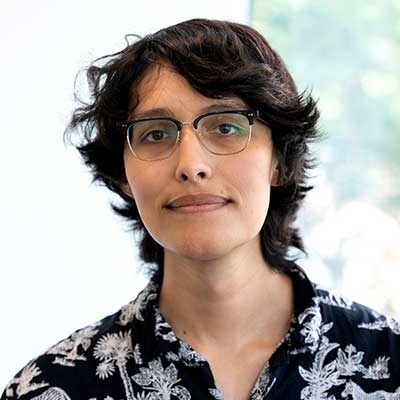

Weaving race and culture into video game storytelling
In the decade since the #GamerGate harassment campaign, a toxic miasma has haunted diversity in gaming. But avoiding identity doesn’t just deprive players of enjoyable games, argues human–computer interaction researcher Alexandra To; it limits the horizons of the stories developers can tell.
Building privacy tools for safer online activism
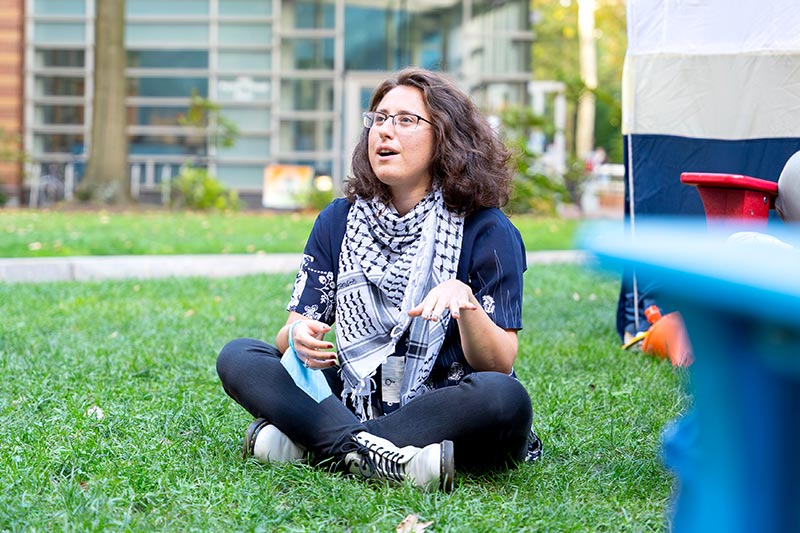
To push for social change, organizers must get the word out while also keeping themselves safe. Who better to build tools to help strike that balance online than someone like Leah Rosenbloom, who has decades of organizing experience?
Creating community-driven solutions for health equity
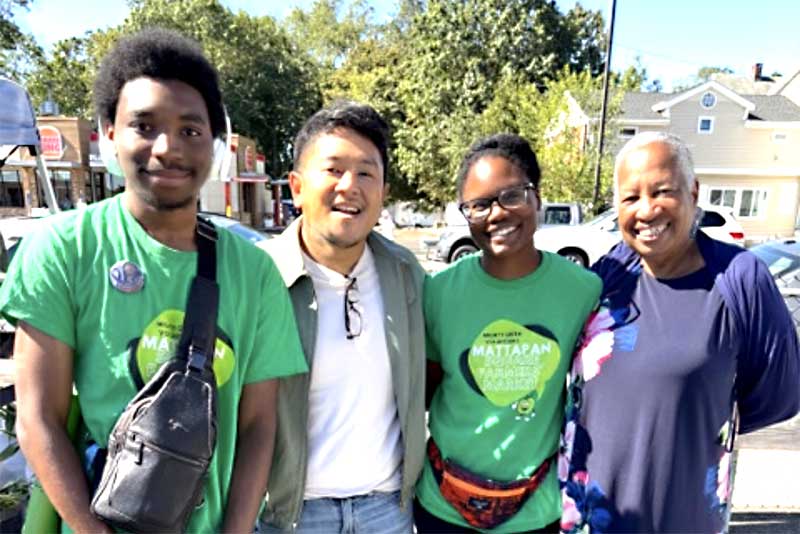
Member–researchers aren’t the only ones whose work can be epistemically just. Khoury College’s Herman Saksono and Mattapan’s Vivien Morris approach health research as a partnership, and their years of collaboration have left them with plenty of insights to share.
Deconstructing the limits on Black women’s online expression
Social media algorithms use “carrots and sticks” to teach users how — and who — they should be to maximize engagement. In the case of Black women, Gianna Williams says, this push and pull results in harmful stereotypes floating to the top. She is working to examine such tropes in the hopes of “disrupting this monolithic view of Blackness.”